Bringing the Cup Home
 Written by
Brian Buck
| 09/28/2026
Written by
Brian Buck
| 09/28/2026
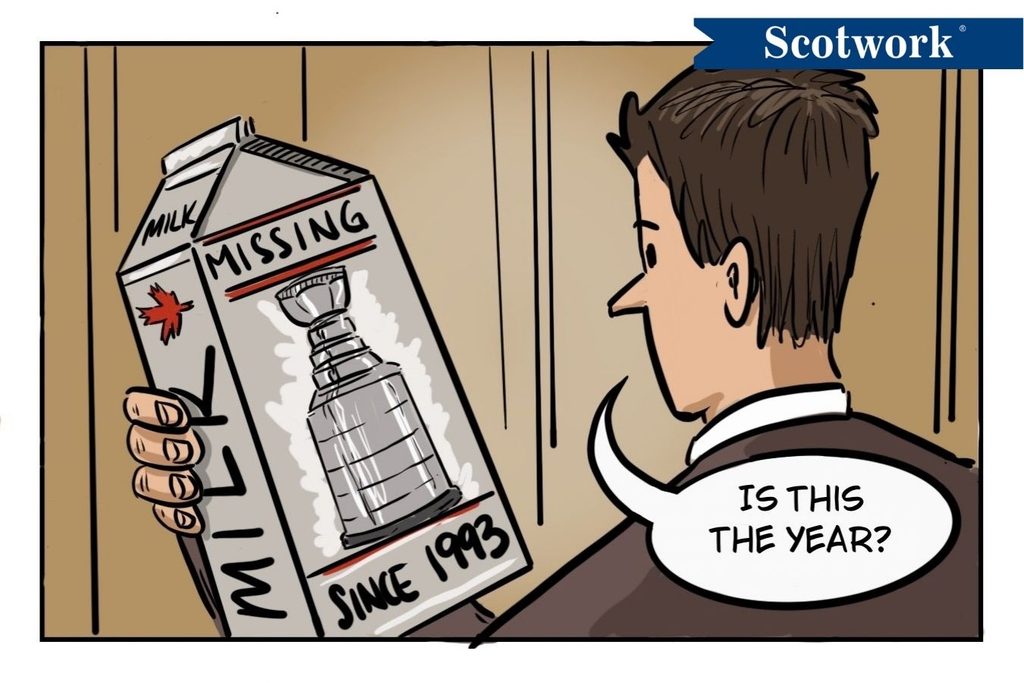
Thirty-three years. That’s how long it’s been since a Canadian team won the Stanley Cup. On June 9, 1993, the Montreal Canadiens beat Wayne Gretzky’s Los Angeles Kings in five games at the Forum. Every Cup since then has gone south of the border.
It hasn’t been for lack of opportunity. Canadian teams have made nine trips to the Final in the time since. Five of those series went seven games, and all five Game Sevens ended the same way. The Canucks lost two, the Flames lost one, and the Oilers lost two, then came back last year and lost to Florida again. This spring, the Habs gave the country hope, winning Game Sevens against Tampa and Buffalo before Carolina ended their run in the Eastern Conference Final. And Leafs fans? They’re still waiting for their first trip to the Final since 1967.
Training camps have opened, and a new season is almost here. So, the annual question is back: Is this the year?
Winning a Cup and getting what you want in a negotiation have more in common than you might think. Talent matters in both, but talent alone rarely gets you there. Championships are built, and so are great deals.
Here’s what it takes . . .
1. Name the right objective.
No team opens camp saying, “Let’s have a decent season.” Contenders say it out loud: “We’re here to win the Cup.” That clarity drives every decision: who you draft, who you sign, and what you’re willing to give up at the trade deadline.
Negotiations work the same way. “Get a good deal” isn’t an objective. It’s a wish. Before you sit down, get specific about what winning looks like: the price, the term, the scope, and the conditions. Then separate what you must have from what you’d like to have. If you can’t describe the win, you won’t recognize it when it’s in front of you. You’ll also struggle to know when to walk away.
2. Have more than one game plan.
Good teams have a system. Great teams have several, and they know when to switch. Against a fast team that lives on quick transitions, you clog the neutral zone with a trap and take away their speed through the middle. Against a heavy team that grinds on the cycle down low, you tighten your coverage in your own end and win the battles along the boards. Injuries, slumps, and opponents who’ve figured you out force adjustments.
At the table, the other side will read your game plan too. If you walk in with one approach and they shut it down, you’re done. Go in with several ways to reach your objective, watch how the other side is playing, and adjust between periods. The objective stays fixed. The route to it shouldn’t.
3. Build depth.
A hot goalie can steal a playoff series. He can’t carry you through 82 games, and he can’t score. Champions roll four lines. In this year’s Final, Carolina’s top line was largely shut down, and the other three lines carried the scoring. Their captain, Jordan Staal, scored in each of the first five games and took home the Conn Smythe.
In a negotiation, depth is the number of things you can put on the table. If price is your only lever, you’re riding one hot goalie and hoping for the best. Before you sit down, build out your bench: timing, volume, term, payment terms, service levels, exclusivity, and anything else that has value to either side. The more variables you bring, the more trades you can make. The more trades you can make, the more value you create and the better you protect what matters most to you.
4. Get your fans behind you.
Ask any visiting player about the Bell Centre. It has nearly 21,000 seats. It’s the biggest barn in the league and produces a wall of sound every time the Habs score. Or head to Winnipeg. The Canada Life Centre is the smallest rink in the NHL at just over 15,000 seats, yet it’s one of the loudest in the league per seat, especially during a Whiteout. Home teams feed off that energy, and visitors feel it.
In a negotiation, your fans are your internal stakeholders: your boss, Finance, Legal, Operations, and the people who will deliver the deal. Having a strong negotiating team goes without saying. But if your stakeholders aren’t aligned before the puck drops, you’ll hear about it. Someone questions your position in front of the other side. Someone gives away a concession in a hallway conversation. Someone second-guesses the deal after it’s signed. Negotiate internally first. Agree on the objective, the priorities, and who has the authority to decide. When your own building is behind you, you play with a lot more confidence.
5. Close it out.
Five Canadian teams have taken the Final to Game Seven since 1993, and none of them won. Getting close doesn’t count.
Deals get lost in the third period too. Fatigue sets in, a last-minute demand shows up, and someone gives something away just to get it done. Before you shake hands, summarize what’s been agreed to, confirm who does what and by when, and get it in writing. The deal isn’t done until it’s done.
Talent gets you into the playoffs. Preparation brings the Cup home.
Winning a Cup and Getting What You Want in a Negotiation Have More in Common Than You Might Think.
Rely on Scotwork’s expertise to help you build championship deals.
Similar articles

By Brian Buck | 14.08.26
AI Knowledge vs. Experience: How to Tell the Difference
Recently, when we were interviewing candidates for our open positions, I noticed something interesting. Some…
By Brian Buck | 24.06.26
Why You Don’t Prepare (and What It’s Costing You)
I asked a group of sales and procurement professionals how many of them consistently…
By Brian Buck | 08.06.26
Your Team Negotiates Like You Do
Culture is one of those things that everyone talks about but few leaders actually manage….