Negotiating with Bullies: Lessons from Canada’s Trade War
 Written by
Brian Buck
| 09/18/2026
Written by
Brian Buck
| 09/18/2026
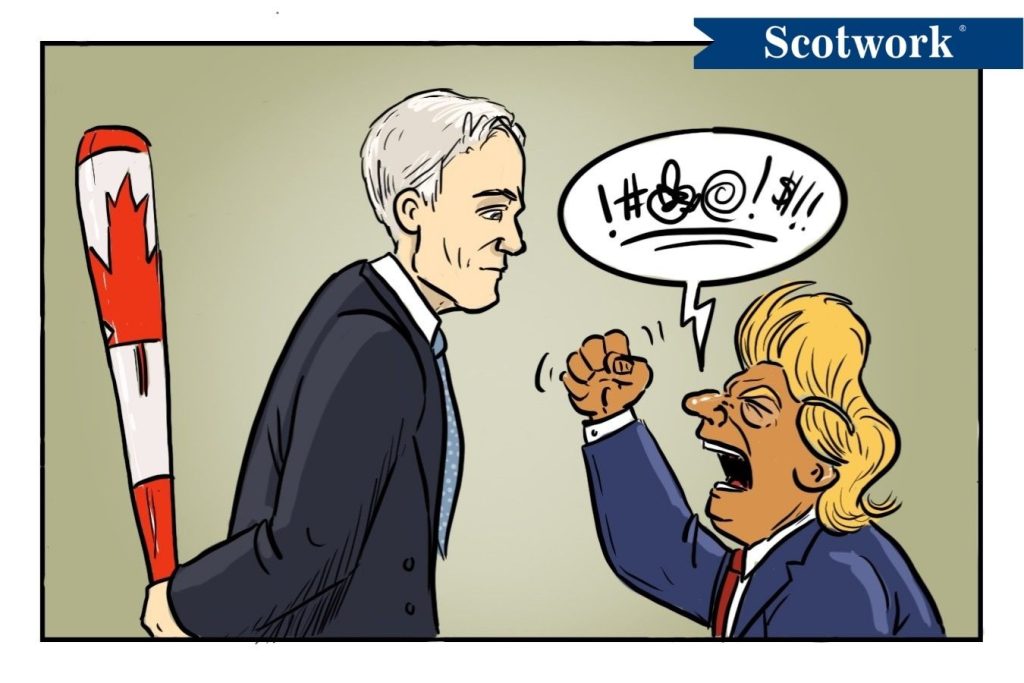
On a Friday night in late August, Canada’s negotiators packed up and flew home.
They had spent days working toward a deal. Then, hours before new American tariffs were set to take effect, the US introduced fresh terms. Not clarifications. New demands, late, on the eve of a deadline. Mark Carney told his team to stop.
By Saturday morning, 50 percent duties were landing on $39 billion in Canadian goods, by Ottawa’s count. Hockey sticks, cement, clothing, beer. Carney’s answer was dollar for dollar, effective September 8, along with a line most Canadians felt before they heard anyone say it out loud: “You’re at war when you get attacked.”
I won’t pretend the economics are simple. Tariffs cost the country imposing them, too. But underneath the flags and the podiums lies a negotiation, and a familiar one. Most of us have sat across from someone who treats pressure as a strategy. The counterpart who reopens settled points. The customer who saves the biggest ask for the last hour. The supplier who knows exactly how badly you need the shipment. Different stakes, same playbook.
Here are 6 techniques to keep in mind when dealing with bullies at the negotiating table . . .
1. Being reasonable is not an effective strategy against someone who reads it as weakness.
Canada tried once to absorb the hit, keep the tone warm, and wait out the storm. In the summer of 2025, most Canadian counter-tariffs were quietly dropped, but the US turned up the pressure. Concessions given without trades don’t read as goodwill. They read as capacity. Teach someone that pushing you produces movement, and you’ve told them exactly what to do next time.
2. Your leverage is built long before you use it.
The most consequential Canadian moves of the past 18 months weren’t made at the table. Trade ties with Europe and Asia were strengthened. Defence procurement drifted away from single-source American suppliers. “Buy Canadian” happened on its own, without anyone being asked. Leverage isn’t the clever thing you say in the room. It’s the alternative you spent two years building so that you could afford to say it.
3. Make your response proportional and public.
Dollar-for-dollar is a very readable response. Everyone can understand the rule, and nobody can call it an overreaction. “Elbows up” was never about swinging wildly. Wild escalation gets written off as emotion, while a matched, published, clearly explained response is a signal, and signals are what change behaviour. In your own deals, that means stating the consequence plainly and in advance, then doing exactly what you said.
4. A late demand is information. Read it before you react to it.
Carney did not walk because the Americans moved the goalposts on autos, or on language protections, or on who else Canada could trade with. He walked because the cumulative effect of those demands told him what kind of partnership was actually on offer.
That distinction matters, because 11th-hour asks are common and sometimes innocent. If you treat everyone as acting in bad faith, you’ll lose deals you should have closed. So look at the other side’s pattern of behavior, in addition to the demand. Leave on that conclusion, not on a deadline and not in a temper.
5. Aim at the behaviour, not the whole relationship.
This is the part, I think, Canadians have handled better than they get credit for. Polling puts unfavourable views of the American president near 80 percent, while views of Americans themselves sit much closer to a split. Burning a relationship to the ground leaves you nothing to work with when conditions change, and conditions always change. Be immovable on the issue and still leave the door open to the person.
6. Decide in advance what “winning” looks like.
Canada’s stated aims are narrow and durable: protect key sectors, reduce dependence, diversify. Those can be achieved without the other side’s cooperation, which is exactly why they’re the right goals in a fight with someone who has no intention of cooperating. Before your next hard conversation, write down what a good outcome looks like if the other side never becomes reasonable. If you can’t answer that, you aren’t negotiating. You’re hoping.
None of these techniques guarantees a result. Standing firm comes at a cost, and Canadian businesses are paying it right now in real orders and real jobs, most heavily in Ontario and Quebec. Anyone who tells you otherwise is selling something.
But giving ground comes at a cost, too, and it charges interest. Concede to buy peace, and you haven’t bought peace. You’ve bought a pause, at a price the other side now knows you’ll pay.
Bullies don’t stop when you become reasonable. They stop when being unreasonable stops paying.
Negotiating with Bullies FAQ
How do you negotiate with an aggressive negotiator? Build alternatives before you need them, respond in ways that are proportional and predictable, and never concede without trading. Aggression is a tactic that works only when it produces movement.
Should you walk away from a negotiation? Walk away based on the pattern, not a single incident. A late demand, a reopened point, or a broken commitment matters most when it’s part of a sequence that tells you what the relationship actually is.
What can Canadian businesses learn from the Canada-U.S. trade war? That leverage comes from diversification, not from argument. Ottawa’s strongest position was built over 18 months of strengthening trade and supply relationships — long before the tariffs landed.
Negotiation Training and Consulting to Help You Bring Elbows Up When You Need To.
Bullies don’t stop when you become reasonable. They stop when being unreasonable stops paying. Rely on Scotwork’s expertise to help you deal with bullies in your negotiations.
Similar articles
By Brian Buck | 11.09.26
Your Renewal Just Got Flagged
Recently, I worked with a large sales team that showed me something they’d built: an…

By Brian Buck | 28.08.26
Dolly Parton and the Power of Saying No in Negotiation
This past week, we lost Dolly Parton. I have strong memories of riding around in…
By Brian Buck | 21.08.26
5 Ways to Keep Improving Your Negotiation Skills
My youngest heads back to college this month to finish her senior year. I can’t…